|
|
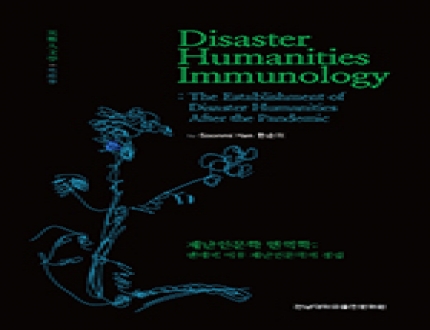
| 도서명 | Disaster Humanities Immunology |
| 저자 | 한순미 |
| 분류 | [인문] |
| 발행일 | 2025-11-28 |
판형 | 신국판변형(152×215) |
| ISBN | 979-11-94716-32-7 (93800) |
| 페이지 | 364 |
정가 | 35,000원 |
|
|
|
|
|
Disaster Humanities research explores the memories, narratives, and healing processes of those affected by catastrophe. It challenges us to reflect on the purpose and mission of the humanities in a hyper-connected, cross-border world shaped by new forms of solidarity and community in the era of artificial intelligence.
Even when we attempt to discuss experiences marked by suffering, words often fall short. Marguerite Duras observes in Hiroshima Mon Amour (1960), "Impossible to talk about Hiroshima;" all we can do is address the impossibility of speaking about such events. This underscores the inherent difficulty in representing trauma.
Andy Warhol's Disaster Series from the 1960s is known for its repeated, emotionless images of accidents. The "Death and Disaster" series intentionally omits emotional content, showing how repetition can numb viewers and prevent full engagement with the events depicted.
While preparing this book, I recalled the dilemmas articulated in Walter Benjamin's essay The Translator's Task (1923). The process of translating familiar terms into new languages leaves some untranslated. Han Kang's Human Acts (2014) prompted me to reflect further on the act of translation, especially as I embraced the frictions between Korean and English.
In the wake of global disasters, certain phrases in this book reflect the chaos of our times, becoming symptoms of disaster themselves. Here, disasters inevitably serve as the protagonists of this book.
In the aftermath of the pandemic and the ensuing social crises, it is essential to examine a broad spectrum of catastrophes — wars, massacres, revolutions, floods, earthquakes, and epidemics — through comparative and cross-reading methodologies. Contemporary Disaster Humanities research raises urgent challenges, including those posed by climate change and infectious diseases.
A virus seems to move 'equally' through an 'unequal' world, yet the COVID-19 pandemic exposed our collective vulnerability and the 'illusion of equality.' Blue-gray ruins suggest an uncertain future. In the coming years, we must identify the images and words that represent this era's upheaval. Which words can we trust? How do we heal language tainted by fear, and where can we restore meaning to words that have lost it?
We often distinguish between disasters that can or cannot be represented in art. The question is not whether art can fully reproduce suffering, nor is that its main purpose. Instead, disaster images prompt us to consider whether art can convey the intensity of trauma. Our focus is on the challenges of artistic representation and how the intensity of trauma is depicted.
This book presents the research journey, using overlapping and cross-reading methods with examples from Disaster Humanities. Beginning with East Asian studies, Disaster Humanities research highlights the complex connections among global catastrophes, examining both similarities and differences.
|
| 도서소개 인쇄하기
|
|
|
ㆍRecommendations / 4
ㆍAcknowledgement / 6
ㆍPreface: Disaster Humanities/Humanities Immunology / 10
# Immune: "Immunity/Hypersensitivity" / 10
# Disaster Humanities is Ultimately Humanities Immunology / 11
# Words Infected With a Virus / 12
# Disasters Are The Protagonists of This Book, 'Inevitably' / 13
PART 1
Navigating Disaster Humanities After the Pandemic: Essential Questions and New Approaches
Ⅰ. Along with Disasters, the Post-Disaster Society / 24
Ⅱ. Connection and Solidarity / 36
PART 2-1
Disaster Humanities as a Multifocal Lens: How to Think about Post-Disaster Society
Ⅰ. Sensitive Tentacles of Thought that Trace the Scars Left by Disasters / 8
Ⅱ. Stories That Blossomed From the Pandemic: The Infinite Possibilities of Conversation / 52
PART 2-2
Disaster Humanities as a Multifocal Lens: How to Represent Post-Disaster Society
Ⅰ. How to "Use" Love: 1980 May 18, To Transcribe Your Memories / 58
Ⅱ. Interface and Interconnection as Healing Rituals: Sensory Representations of Trauma / 76
Ⅲ. Nothing Disappeared: The Representation of Disaster Trauma and Testimony as the Image / 94
PART 3
Body and Handicapped: Interpreting Korean Hansen's Disease Memories and Records
Ⅰ. Faces of a Korean Hansen's Disease Patient: Stories of Double Expelled / 112
Ⅱ. Social Integration for Recovered Patients: Multiple Perspectives / 129
PART 4
Local and Global Perspectives on Infectious Disease Disaster: Examining Korean Hansen's Disease Memories and Records
Ⅰ. Telling with "You": Designing the Enlightenment Project of Hansen's Disease Listening from the Autobiographical Memory of Dr. Joon Lew / 154
Ⅱ. Disaster Healing Communities Grounded in Spirituality in a Cross-Border, Hyper-Connected Era: The Leprosy Treatment Project in Kangwon Province Since the 1960s / 172
Ⅲ. DDS (Diaminodiphenyl sulfone) and Cosmetics: Exploring the Life History of Hansen's Disease Sanatoriums, Focusing on National Sorokdo Hospital / 190
ㆍAppendix 1_Disaster Humanities: The Memory, Narrative, and Healing of East Asian Disaster 재난인문학: 동아시아 재난의 기억, 서사, 치유 / 216
ㆍAppendix 2_After Walking Through Ashes: How Can Disaster Become an Agenda of Humanities 잿빛을 통과한 그날 이후: 재난은 어떻게 인문학의 주제가 될 수 있는가? / 233
ㆍAppendix 3_Primary Sources (2018-2025): Disaster Humanities Research Abstract / 270
ㆍBibliography / 292
ㆍGlossary / 324
ㆍArticle List / 343
ㆍEndnote / 347
|
|
|
|
|
|
|















 210
210